Invasive Species Management in Mooresville
Invasive Species Management in Mooresville, NC
Service Area and Availability in Mooresville, NC
We provide invasive species management services throughout Mooresville, NC and the surrounding communities, including areas along Brawley School Road, Langtree Road, and Williamson Road, as well as neighborhoods like The Point, Chesapeake Pointe, and River Run. Our team works across Iredell County and the broader Lake Norman area, and we are available to assess your property and get work scheduled without a long wait. Whether you have a small residential lot or a larger wooded tract, we can come out, take a look, and put together a plan that fits your situation.
The Problem Invasive Species Are Causing on Your Property
If you have noticed certain plants taking over your tree line, crowding out your shrubs, or spreading into areas you thought were cleared, you are dealing with a problem that does not fix itself. Invasive plants and non-native trees grow aggressively, and they do not stop at your property line. They shade out native plants, compete for water and nutrients, and can weaken or even kill established trees over time. Many homeowners in the Mooresville area try cutting them back on their own, only to see them return stronger the next season. That happens because most invasive species grow back from their root systems, and cutting the visible growth without treating the plant correctly just delays the problem. Invasive species control done right means addressing the whole plant, not just what you can see above ground.
Local Knowledge: Mooresville Conditions and Common Invasive Species in the Area
We have been working in Mooresville for over 10 years, and we know how the conditions here affect how invasive plants grow and spread. The red clay soils common throughout Iredell County hold moisture in ways that favor aggressive spreaders like kudzu, privet, and Bradford pear, all of which are widespread in this area. Properties near Lake Norman, Coddle Creek, and the Catawba River corridor deal with additional pressure from plants that thrive in riparian zones, including Japanese knotweed and invasive water-loving species that establish quickly along wet edges. The warm, humid climate of the Piedmont region extends the growing season, which means invasive plants here get more time each year to spread and root in. We also work closely with guidance from the NC Invasive Plant Council and follow NC Plant Protection and Conservation Act standards, so the work we do is both effective and responsible. That local familiarity matters when it comes to choosing the right treatment approach for your specific site.
Frequently Asked Questions from Mooresville Homeowners
How do I know if I have invasive species on my property?
Common signs include plants that are spreading unusually fast, taking over areas where nothing else seems to grow, or showing up along fence lines and tree edges in dense thickets. In the Mooresville area, we frequently see kudzu, Chinese privet, English ivy, tree of heaven, and Bradford pear on residential and wooded properties. If you are unsure what you are dealing with, we can come out and identify the plants before any work begins. Correct identification is one of the most important steps in non-native species management, because the right treatment depends entirely on knowing what you are treating.
Is it safe to treat invasive plants near my other trees and landscaping?
Yes, when the work is done carefully and by someone who knows what they are doing. We use targeted application methods, including cut stump treatment and basal bark application, that minimize contact with surrounding plants. When herbicides like Triclopyr or Glyphosate are needed, we follow EPA pesticide label requirements and apply them at the appropriate concentration and timing to reduce the risk of drift or runoff. We also hold an NC Pesticide Applicator License, which means we are trained and certified to handle chemical treatments safely on your property.
Will the invasive plants come back after treatment?
Some species may require more than one treatment, especially those that spread through underground root systems or seed banks. We are upfront about that from the start. Our approach follows integrated pest management principles, which means we do not just treat once and walk away if the situation calls for follow-up. We also use materials like biodegradable weed barrier and native plant plugs in some cases to help stabilize cleared areas and reduce the chance of reinfestation. The goal is long-term results, not a quick fix that leaves you dealing with the same problem in a year.
Do you work near water, like along Lake Norman or Coddle Creek?
Yes, and we take extra care in those areas. Aquatic invasive plants and shoreline species require specific herbicide choices and application methods to protect water quality. We maintain a buffer zone of at least 100 feet from waterways when using certain products, and we select herbicides that are labeled for use near water when treatment is necessary close to the Lake Norman shoreline or along creek edges. We are familiar with the NC DENR Mooresville Regional Office requirements that apply to work near water, and we make sure our work stays within those guidelines.
If you want to understand what invasive species management actually involves on a practical level for your property, the next section covers exactly that.
What Invasive Species Management Means for Your Property
If you have noticed thick tangles of vines, fast-spreading shrubs, or dense patches of unfamiliar plants taking over parts of your yard or wooded areas, you may already be dealing with invasive species. Invasive species control is one of the more involved services we offer, and it goes well beyond simple brush clearing. Here is what it actually means and why it matters for properties in the Mooresville area.
What Invasive Species Management Actually Involves
Invasive species management is a structured process. We start by walking your property and correctly identifying what is growing there. Misidentifying a plant leads to wasted effort and sometimes damage to trees and shrubs you want to keep. From there, we put together a removal and treatment plan that fits your specific site conditions, the type of species present, and how far the infestation has spread.
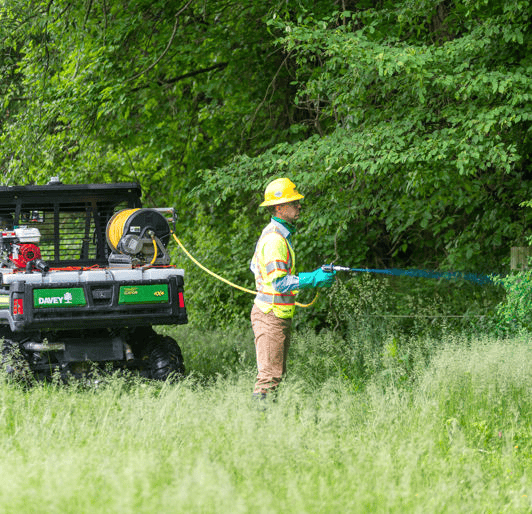
Depending on what we find, removal may involve a brush cutter, a Stihl chainsaw, or a stump grinder for woody invasives. For plants that regrow from roots, we often follow up with a cut stump treatment using products like Triclopyr or Garlon 4 Ultra, applied within 10 minutes of cutting to get the best result. On larger areas, we may use a Solo backpack sprayer or an ATV-mounted sprayer for foliar application. All chemical use follows EPA pesticide label requirements and NC Department of Agriculture and Consumer Services regulations. Where the ground is disturbed after removal, we may use hardwood mulch, native plant plugs, or erosion control blankets to help the area recover and discourage invasives from returning.
The Difference Between Invasive Plants and Native Plants
Native plants are species that naturally belong in the Piedmont region. They have developed alongside local wildlife, insects, and soil systems over a long period of time. They support birds, pollinators, and the overall health of the land without taking over. Non-native species management becomes necessary when plants introduced from other regions or countries spread aggressively and crowd out those native systems.
Invasive plants are not just unfamiliar. They reproduce quickly, spread widely, and have few natural controls in this environment. They compete with native trees and shrubs for sunlight, water, and nutrients, and they can change the way soil functions over time. Native biodiversity protection is a core part of what we do when we manage these species on your property.
Why Invasive Species Are a Growing Problem in the Mooresville Area
Mooresville sits in the Piedmont region, where red clay soils, riparian corridors along waterways like Coddle Creek and the Catawba River, and the mix of developed and wooded land create conditions where invasive plants spread easily. Disturbed soil along roads, construction sites, and cleared lots gives invasive species an opening. Once established, they move quickly into adjacent natural areas.
Properties near Lake Norman and along creek corridors see some of the heaviest pressure. Invasive plants spread along these areas through water movement, wildlife, and soil disturbance. The Iredell County Cooperative Extension and NC Invasive Plant Council best management practices both recognize this region as an area of active concern. Early detection and a rapid response are the most effective ways to keep a manageable problem from becoming a much larger one.
With over 10 years of working in Mooresville, we have seen firsthand how quickly certain species can take hold across different property types, from wooded lots in Cain Creek Estates to riparian buffer zones near the Lake Norman shoreline. Understanding what you are dealing with is the first step, and that starts with knowing which species are most commonly found here.
Common Invasive Species We Find in Mooresville, NC
After more than 10 years working across Mooresville and the surrounding Lake Norman area, we have seen the same invasive plants cause problems on properties throughout Iredell County. Knowing what you are dealing with is the first step in invasive species control, and accurate identification is something that takes time and experience to develop in the field.
Kudzu and How It Smothers Trees and Shrubs
Kudzu is one of the most aggressive non-native plants we encounter across the Piedmont region. It spreads quickly over trees, fences, and structures, blocking sunlight and pulling branches down under its weight. Once it gets established in your yard, the root system can run deep into Iredell County soils, making surface-level removal only a temporary fix.
English Ivy and Its Effect on Tree Bark and Root Systems
English ivy might look tidy in a garden bed, but when it climbs into your trees, it creates serious problems. The vines trap moisture against the bark, which invites rot and disease. The extra weight also makes trees more likely to fail during storms. Along the Lake Norman shoreline and riparian corridors near Coddle Creek, we see ivy spread rapidly through wooded areas with little resistance.
Privet and Chinese Wisteria in Wooded and Residential Areas
Privet grows densely in shade and edges out native shrubs and understory trees. It is common in wooded backyards throughout West Mooresville and in subdivisions like River Run and Cain Creek Estates. Chinese wisteria is similarly stubborn. Its woody vines twist around tree trunks and limbs, eventually girdling them. Both plants require targeted species removal rather than simple cutting, since both will resprout aggressively from the base if not treated properly.
Tree of Heaven and Its Rapid Spread on Disturbed Land
Tree of Heaven thrives wherever land has been cleared, graded, or disturbed. That makes it a frequent problem near new construction and along roadsides on corridors like Brawley School Road and Langtree Road. It grows fast, produces large seed crops, and releases chemicals into the soil that suppress native plant growth. Following NC Invasive Plant Council best management practices, we use methods like basal bark application and cut stump treatment to reduce regrowth.
Other Invasive Shrubs and Vines Commonly Found in Iredell County
Beyond the well-known offenders, we regularly find autumn olive, multiflora rose, Japanese honeysuckle, and Bradford pear competing with native plants across properties in Mooresville and the broader Lake Norman area. These plants spread through seeds, root runners, and bird activity, which means an untreated patch on one side of your property can expand quickly. Early detection and a consistent approach to non-native species management are what keep these plants from taking over larger sections of your land.
Understanding what is growing on your property is only part of the picture. The more important question is what these plants are doing to your trees, soil, and overall landscape over time.
A few years back, we got a call from a homeowner over near Lake Norman who was dealing with a serious problem on their property. Japanese honeysuckle and kudzu had completely taken over about two acres of their wooded backyard. When we showed up to take a look, it was one of the worst cases of invasive plant growth we had seen in our years working in Mooresville.
The real challenge started when we began removing the kudzu. That plant had wrapped itself around nearly every tree on the property, some of which were large white oaks and pines that the homeowner wanted to keep. Cutting the vines was one thing, but we had to be very careful not to damage the bark on those trees. Kudzu can grip so tightly that pulling it the wrong way can strip bark right off a trunk, which opens the tree up to disease and insects.
About a week into the project, we hit another snag. The root systems from the Japanese honeysuckle had grown so deep and wide that our standard removal tools were not cutting it. We had to bring in additional equipment and spend extra time hand-digging around the base of the trees you wanted to save. It added days to the job.
In the end, we cleared everything out, treated the soil to stop regrowth, and gave you a plan to monitor the area going forward. That job taught us a lot about how aggressive invasive species can be here in the Mooresville area, and we carry those lessons into every invasive species management project we take on today.
How Invasive Species Damage Your Trees and Land
If you have noticed your trees looking thin, your shrubs struggling, or patches of dense tangled growth taking over parts of your yard, invasive plants may be the cause. Across Mooresville and the surrounding Lake Norman area, non-native species management has become a growing concern for homeowners and land managers alike. We have seen firsthand how quickly these plants move in and how much damage they can do when left unchecked.
How Invasive Plants Compete with Native Trees for Water and Nutrients
Invasive plants are aggressive by nature. Many of them were not designed to grow in the Piedmont region's red clay soils and Iredell County conditions, yet they thrive here because nothing naturally keeps them in check. Plants like kudzu, privet, and Bradford pear spread quickly and pull water and nutrients away from the trees and shrubs that belong here. Your native oaks, dogwoods, and understory plants simply cannot compete at the same rate. Over time, even healthy, established trees begin to show signs of stress.
Root Damage and Soil Health Problems Caused by Invasive Species
Below the surface, invasive root systems can disrupt the structure of your soil. In areas with alluvial soils or along riparian corridors near Coddle Creek or Back Creek, the problem is especially common. Some invasive plants release chemicals into the soil that suppress native plant growth, a process called allelopathy. Others create dense root mats that reduce water infiltration and accelerate erosion. Once soil health breaks down, even ecological restoration takes longer and costs more.
How Overgrowth Increases Pest and Disease Risk on Your Property
Dense invasive growth gives pests and plant diseases a place to hide and spread. Thick stands of privet, English ivy, or Japanese honeysuckle trap moisture against tree bark and create conditions where fungal disease takes hold. Insects that carry disease between trees also tend to shelter in overgrown areas. We have worked on properties near Brawley School Road and in neighborhoods like Chesapeake Pointe where invasive overgrowth had already allowed disease pressure to move into otherwise healthy tree canopies. Pest monitoring and early intervention are key to stopping that cycle before it worsens.
Fire Risk from Dense Invasive Vegetation
This is a concern many property owners in Mooresville do not think about until conditions get dry. Invasive vines and shrubs produce large amounts of dry biomass that burns fast and hot. When that growth climbs into your tree canopy or presses against structures, it raises the fire risk on your property. The NC Forest Service Piedmont District has noted that dense invasive vegetation contributes to this problem across the region, particularly during late summer and fall dry periods.
Spread to Neighboring Properties and the Larger Local Ecosystem
Invasive plants do not stay in one place. Seeds travel by wind, water, and wildlife. Improper removal, like cutting without treating or mowing before seeds drop, can actually speed up the spread. Properties along the Lake Norman shoreline and near Ramsey Creek Park have seen invasives move from private land into natural areas, making native biodiversity protection harder for everyone. When invasive growth crosses property lines, it becomes a shared problem that affects your neighbors, local parks, and waterways like the Catawba River.
Understanding what these plants are doing to your trees and land is the first step. The next step is knowing how to remove them correctly, which is where our process comes in.
Our Invasive Species Removal Process
When invasive plants take hold on a Mooresville property, having a clear, step-by-step plan makes a real difference. We have spent over 10 years working in this area, and we know how quickly non-native species can spread through the Piedmont region, especially near riparian corridors along Coddle Creek or the Lake Norman shoreline. Here is how we approach the work from start to finish.
Property Assessment and Identifying What You Are Dealing With
Before we cut anything, we walk your property carefully. Correct identification is one of the most important parts of invasive species control. Misidentifying a plant can mean treating the wrong thing, damaging native growth, or missing the actual problem entirely. We look at what species are present, how far they have spread, and where they are putting the most pressure on your trees and native plants. For properties near waterways, we also note any aquatic invasive plants along the edges, since those require different handling within a buffer zone from the water. Our assessment gives us the information we need to build a plan that fits your specific site.
Selective Removal Versus Full Clearing: Choosing the Right Approach
Not every situation calls for clearing everything out. Sometimes selective removal is the better choice, especially when native trees and shrubs are growing alongside the invasives and need to stay. We weigh the level of infestation, what healthy plants are nearby, and what your goals are for the land. In some cases, full clearing using a forestry mulcher or hydro-axe makes more sense, particularly on heavily overgrown lots or land being prepared for development. We follow NC Invasive Plant Council best management practices when making these calls, and we take the time to explain our thinking to you before work begins.
Safe Cutting, Pulling, and Treatment Methods We Use
We use a combination of physical removal and, where needed, targeted chemical treatment. For woody invasives, cut stump treatment applied within 10 minutes of cutting is one of the most reliable methods we use to prevent regrowth. We apply herbicides like Triclopyr or Garlon 4 Ultra at a 2% solution concentration depending on the species and site conditions. For larger stems, basal bark application at 18 inches above ground is another approach we use when pulling or cutting alone will not get the root. All chemical applications follow EPA pesticide label requirements and NCDA&CS regulations. Our team holds proper licensing for pesticide application, and we are careful about timing, weather, and proximity to water when treating near areas like Back Creek or the Catawba River.
How We Protect Your Healthy Trees and Native Plants During Removal
One of the risks with invasive species removal is unintentional damage to the trees and plants you want to keep. We work carefully around desirable growth, using hand tools and a Stihl chainsaw for precise cuts rather than broad mechanical clearing in sensitive areas. When native plants are close to the work zone, we flag them ahead of time and adjust our approach. We also take steps to avoid compacting soil around tree roots and limit equipment access in areas where root systems could be damaged. Protecting your healthy canopy and understory is part of the job, not an afterthought.
Debris Cleanup and Disposal After Removal
How invasive material gets handled after cutting matters more than most people realize. Many invasive species can reroot or reseed from cut material left on the ground. We do not just pile debris and leave it. Depending on the species, we either chip material on-site, bag and haul it away, or in some cases treat it before disposal. We follow proper quarantine protocols to make sure seeds and root fragments do not spread to other parts of your yard or neighboring properties. Once the site is cleared, we can also apply hardwood mulch or biodegradable weed barrier to help stabilize the soil and slow any immediate regrowth.
Removal is only part of the picture, though. Keeping invasive species from returning takes consistent follow-up, and that is where a solid plan for the months ahead becomes important.
Preventing Invasive Species From Coming Back
Why Removal Alone Is Often Not Enough
Getting rid of invasive plants is only part of the job. Many of the species we deal with across Mooresville and the surrounding Piedmont region, including kudzu, privet, and Japanese honeysuckle, store energy in their root systems. Even after cutting or pulling, those roots can push out new growth within weeks. Without a follow-up plan, you are likely to see the same plants return in the same spots.
Follow-Up Treatments and Monitoring Your Property
After the initial invasive species control work is done, we schedule return visits to check for regrowth and treat any new sprouts before they take hold. Depending on what we find, this may include cut stump treatment or a targeted foliar application following EPA pesticide label requirements. We use tools like a GPS mapping unit to track treated areas so nothing gets missed between visits. A reapplication interval of around 60 days is common for many species, though that can vary based on conditions in your yard and the time of year.
Supporting Native Plant Regrowth After Invasive Removal
Once invasives are cleared, the bare ground they leave behind needs attention. Open soil is an easy target for new weed pressure. We often work with materials like hardwood mulch, native plant plugs, and biodegradable weed barrier to help stabilize the area and give native plants a better chance to establish. Along areas near Coddle Creek or other riparian corridors, riparian buffer plantings and coir fiber matting can help protect soil while native grasses and shrubs fill back in. This kind of ecological restoration work supports native biodiversity protection over the long term.
What You Can Do Between Service Visits to Slow Regrowth
There are simple steps you can take on your own to support the work we do. Avoid disturbing treated areas before new native plants have had time to root in. Let us know if you notice regrowth or new patches showing up in areas that looked clear. Early detection goes a long way toward keeping an infestation from spreading to other parts of your property or into neighboring yards. You do not need to treat anything yourself. Just noting what you see and when helps us plan smarter follow-up visits. The Iredell County Cooperative Extension is also a useful local resource if you want to learn more about the plants common to this area.
Keeping invasive plants from coming back requires more than a one-time cleanup. The properties that hold up best over time are the ones where removal, follow-up care, and ground-level monitoring all work together. That kind of layered approach connects directly to the broader land management work we provide, which goes well beyond basic removal.
We Know Mooresville Trees Inside and Out
We are a locally based tree care company serving Mooresville, NC and the surrounding area. Our crew has over 20 years of combined experience in tree care, and we have been working specifically in Mooresville for more than 10 years. That means we know this area well — the tree species that grow here, the soil conditions across different neighborhoods, the storms that roll through Lake Norman, and the common tree problems that affect properties in this part of North Carolina.
Tree work is not something to take lightly. Whether a tree is leaning toward your roof, a storm has dropped a limb across your driveway, or you simply want your trees to stay healthy for years to come, the decisions made during tree care have real consequences for your property and your safety. We take that seriously on every job we do.
Our team handles a full range of tree services for both homes and businesses in Mooresville. We do routine work like tree trimming, pruning, and fertilization, and we also respond to emergency situations when a tree or limb becomes a hazard after a storm. On top of that, we offer stump grinding, root removal, land clearing, tree planting, invasive species management, and tree health assessments when something does not look right with one of your trees.
When you work with us, you get a crew that carries the proper equipment, follows safe work practices, and cleans up thoroughly when the job is done. We are not a company that does a quick cut and leaves the mess behind. We treat your property the way we would want our own treated, and we bring real local knowledge to every project we take on in Mooresville.
Land Management Services That Go Beyond Basic Removal
When invasive plants take hold on a property in Mooresville, simply cutting them back is rarely enough. We take a broader approach to invasive species control that considers the overall health of your land, not just what is visible on the surface. With over 10 years of hands-on work across Iredell County, we understand how non-native plants behave in the Piedmont region and how they interact with red clay soils, riparian corridors, and the wooded buffers common along Coddle Creek and other local waterways.
Brush Clearing and Selective Tree Removal for Land Health
Dense brush from invasive shrubs and vines can crowd out healthy trees and make your property difficult to manage. We use equipment like brush cutters and forestry mulchers to clear overgrown areas while protecting the native trees and plants you want to keep. Selective removal means we are not just clearing everything in sight. We target the problem plants and leave the good ones behind.
Habitat Restoration for Wooded or Neglected Areas of Your Property
Many properties near Lake Norman and along Brawley School Road have wooded sections that have been overtaken by non-native species over time. After we complete species removal, we can support ecological restoration by helping reintroduce native ground cover using materials like native plant plugs, hardwood mulch, and riparian buffer plantings. This gives your land a better foundation going forward and supports native biodiversity protection in a practical, lasting way.
Preparing Land for Development or Landscaping After Invasive Clearing
If you are planning to build, grade, or landscape a section of your property, getting rid of invasive plants first makes that work much easier and more effective. We follow NC Invasive Plant Council best management practices and handle proper disposal so that cleared material does not re-root or reseed elsewhere on your lot. We can also coordinate with the Town of Mooresville Development Services if your project has permit considerations tied to land disturbance.
Improving Access for Mowing, Walking, and General Property Use
Thick invasive growth can block paths, fence lines, and open areas that should be easy to maintain. Once we clear those areas, regular mowing and upkeep become far more manageable. Properties in subdivisions like Chesapeake Pointe or along the Williamson Road corridor often have back sections that go unattended for years. Clearing them out improves how you use and enjoy your property day to day.
Taking care of these issues now also sets the stage for something worth understanding in more detail: the real cost of waiting. Addressing invasive species early makes every part of this process simpler and less expensive over time.
Benefits of Addressing Invasive Species Early
Catching invasive plants before they spread is one of the most practical things you can do for your property in Mooresville. Whether you are near the Lake Norman shoreline, along a riparian corridor off Coddle Creek, or on a wooded lot in the Brawley School Road Corridor, invasive species move fast. Early detection and a clear removal plan give your trees, shrubs, and native plants a real chance to recover. The longer you wait, the harder and more costly the work becomes.
Protecting Your Property Value in the Mooresville Market
Overgrown invasive vegetation makes a property look neglected and can quietly reduce its value. In areas like The Point or Pinnacle Shores where curb appeal matters, keeping invasive plants in check helps your landscape stay presentable and healthy. A well-managed property is also easier to sell, inspect, and insure. Invasive species control is not just about plants. It is about protecting what you have invested in your land.
Lowering Long-Term Maintenance Costs by Stopping Problems Early
A small patch of kudzu or privet can become a much bigger problem within a single growing season in Iredell County soils. When we address infestations early using integrated pest management methods, we reduce how often treatments are needed later. Cut stump treatments applied within 10 minutes of cutting and targeted foliar applications at the right concentration can stop regrowth before it takes hold again. That means fewer service visits and lower costs for you over time.
Keeping Your Outdoor Spaces Clean, Safe, and Usable
Dense invasive growth blocks paths, crowds out useful trees, and can hide trip hazards and pest activity. When we clear invasive vegetation from your yard or wooded areas, you get better access for mowing, walking, and general upkeep. We use equipment like brush cutters, forestry mulchers, and Stihl chainsaws to work efficiently without damaging the plants and trees you want to keep. Proper cleanup and disposal also prevent seeds and fragments from spreading to other parts of your property or to neighboring lots.
Supporting Local Wildlife and Water Health Through Native Plant Systems
Invasive plants crowd out native species that local wildlife depends on for food and shelter. Along waterways like Coddle Creek and Back Creek, non-native species management and the restoration of native plant systems help protect water quality and reduce erosion. We follow NC Invasive Plant Council best management practices and maintain buffer zones when working near water. Restoring native biodiversity takes time, but removing what does not belong is the first step toward healthier land.
Addressing these issues early makes every part of the process more manageable. When you understand what is at stake, it also becomes easier to see what to look for in the team you hire to handle it.
Why Work With Us for Invasive Species Management in Mooresville
If you have invasive plants taking over your property, you want someone who knows what they are looking at and has the right tools and experience to deal with them properly. We have spent over 10 years working in Mooresville and Iredell County, and that time on the ground makes a real difference when it comes to invasive species control.
Our Experience Working in Mooresville and Iredell County
We have worked on properties throughout the area, from the Lake Norman shoreline and riparian corridors along Coddle Creek to wooded lots near Brawley School Road and neighborhoods like Chesapeake Pointe and River Run. The Piedmont region comes with its own set of conditions, including red clay soils and floodplain areas that create ideal environments for invasive plants to spread fast. We understand how local site conditions affect what grows here and what it takes to manage it responsibly. We also stay current with NC Invasive Plant Council best management practices and follow NC Department of Agriculture and Consumer Services regulations when chemical treatments are needed.
How Our Tree Care Background Helps Us Manage Invasive Species Safely
Because we work with trees every day, we know how to identify what belongs on your property and what does not. That matters more than most people realize. Improper removal can damage healthy trees nearby, and careless disposal of invasive material can spread seeds or root fragments to other parts of your yard or neighboring properties. We use equipment like brush cutters, forestry mulchers, and stump grinders to handle removal thoroughly, and when herbicide treatments are appropriate, we apply products such as Triclopyr or Glyphosate following EPA pesticide label requirements. Cut stump treatments are applied within 10 minutes to improve effectiveness, and we maintain a buffer zone of at least 100 feet from any waterway. This kind of careful, knowledgeable approach supports native biodiversity protection and gives your property a real chance to recover.
Our Approach to Honest, Straightforward Property Assessments
When you contact us, we come out and take a close look at what is actually happening on your property. We tell you what we see, which species are present, how far they have spread, and what your realistic options are. We do not oversell treatments or push services you do not need. If the infestation is minor, we will tell you that. If it requires a multi-step plan with reapplication at 60-day intervals, we will explain why. You deserve a clear picture of what the work involves before anything starts. That kind of straightforward communication is what keeps our clients in Mooresville and across Iredell County coming back to us.
With the right identification, the proper tools, and a plan built around your specific property, non-native species management does not have to feel overwhelming. In the next section, we bring together everything covered here to help you take a confident next step toward a healthier, cleaner property.
Take the Next Step Toward a Healthier Property
Why Invasive Species Management Matters for Your Property
Invasive plants and trees are one of the quieter threats to properties in the Mooresville area. They move in slowly, crowd out native growth, and by the time most people notice, the problem is already well established. Whether you have kudzu climbing through your tree line, privet taking over a wooded corner, or non-native vines working their way along the Lake Norman shoreline, these plants do real damage over time. They weaken your trees, degrade your soil, push out native plants, and make your property harder to manage and less pleasant to use.
The good news is that early, targeted action makes a real difference. Invasive species control handled correctly now means fewer problems, lower costs, and a better-looking property down the road. Waiting tends to make the work bigger and more expensive.
Why Reaching Out for a Property Assessment in Mooresville Makes Sense
We have spent over 10 years working on properties throughout Mooresville and the surrounding area. We understand the local soil conditions, the species that tend to spread in the Piedmont region, and the right approach for different site types, whether that is a wooded backyard, a riparian corridor along Coddle Creek, or an open lot near Brawley School Road. When you work with us, you get a plan built around your specific property, not a one-size-fits-all treatment.
Here is what you get when you choose us for invasive species management:
- Accurate identification of invasive plants so the right species get treated
- A customized removal and treatment plan based on your site conditions
- Careful work that protects your healthy trees, shrubs, and native plants
- Proper use of approved herbicides following EPA pesticide label requirements and NC Department of Agriculture and Consumer Services regulations
- Equipment matched to the job, from brush cutters and forestry mulchers to backpack sprayers and stump grinders
- Responsible cleanup and disposal to prevent regrowth and spreading
- Knowledge of local conditions around Lake Norman, Iredell County, and nearby communities
- Long-term results that hold up, not quick fixes that let the problem come back
- Reduced risk to your trees, your land, neighboring properties, and the wider local ecosystem
- Better access, appearance, and safety on your property when the work is done
If invasive plants are a concern on your property, the best move is to get a professional set of eyes on it. We are happy to come out, take a look, and walk you through what we see and what we would recommend. You can reach us by phone or fill out the form below to request your free quote.
Mooresville NC Tree Contractor
128-162 North Broad Street
Mooresville, NC 28115
Business Hours
| Mon | 7:00 AM – 10:00 PM |
| Tue | 7:00 AM – 10:00 PM |
| Wed | 7:00 AM – 10:00 PM |
| Thu | 7:00 AM – 10:00 PM |
| Fri | 7:00 AM – 10:00 PM |
| Sat | 7:00 AM – 10:00 PM |
| Sun | 7:00 AM – 10:00 PM |